
Table of Contents
- Telehealth vs In-Person Psychiatric Care: Key Differences
- What Telehealth Psychiatric Evaluation Involves
- What In-Person Psychiatric Care Involves
- Telehealth Medication Management: Effectiveness and Process
- Telehealth Psychiatry Benefits and Limitations
- When to Choose In-Person Psychiatric Care
- Effectiveness and Treatment Outcomes: What the Evidence Shows
- Making Your Decision: Practical Considerations
- Frequently Asked Questions
Last Updated: October 13, 2026
Telehealth vs In-Person Psychiatric Care: Key Differences
Understanding telehealth vs in-person psychiatric care shapes how you receive treatment, connect with your provider, and manage your mental health. At Dynamic Mental Health Services LLC, we help patients navigate this decision by explaining what each option involves and who benefits most from each approach. (Source: HIPAA Security Rule)
Telehealth psychiatric care uses secure video platforms to connect you with a psychiatrist from home. In-person psychiatric care happens in a clinical office where your provider conducts a physical examination and face-to-face assessment. Both deliver real psychiatric treatment. The difference lies in access, convenience, and the specific clinical situations where one works better than the other.
Understanding these differences matters because the right choice depends on your symptoms, your schedule, your home environment, and whether medication management is part of your care plan.
What Telehealth Psychiatric Evaluation Involves
The Assessment Process
A telehealth psychiatric evaluation follows the same diagnostic framework as in-person care. Your provider reviews your psychiatric history, current symptoms, family background, and any past treatments. They ask detailed questions to understand your mental health needs.
For conditions like ADHD, a comprehensive telehealth evaluation includes structured assessment tools and diagnostic criteria. The clinician gathers information about how symptoms show up in your daily life, at work, at home, in relationships. They may ask you to describe specific examples of how your symptoms affect your focus, organization, or emotional regulation.
The evaluation typically lasts 60 to 90 minutes for an initial appointment. Your provider takes notes, asks clarifying questions, and develops a treatment plan based on what they learn. This process generates the same diagnostic information as an in-person visit, though the physical exam happens differently.
Technology and Setup Requirements
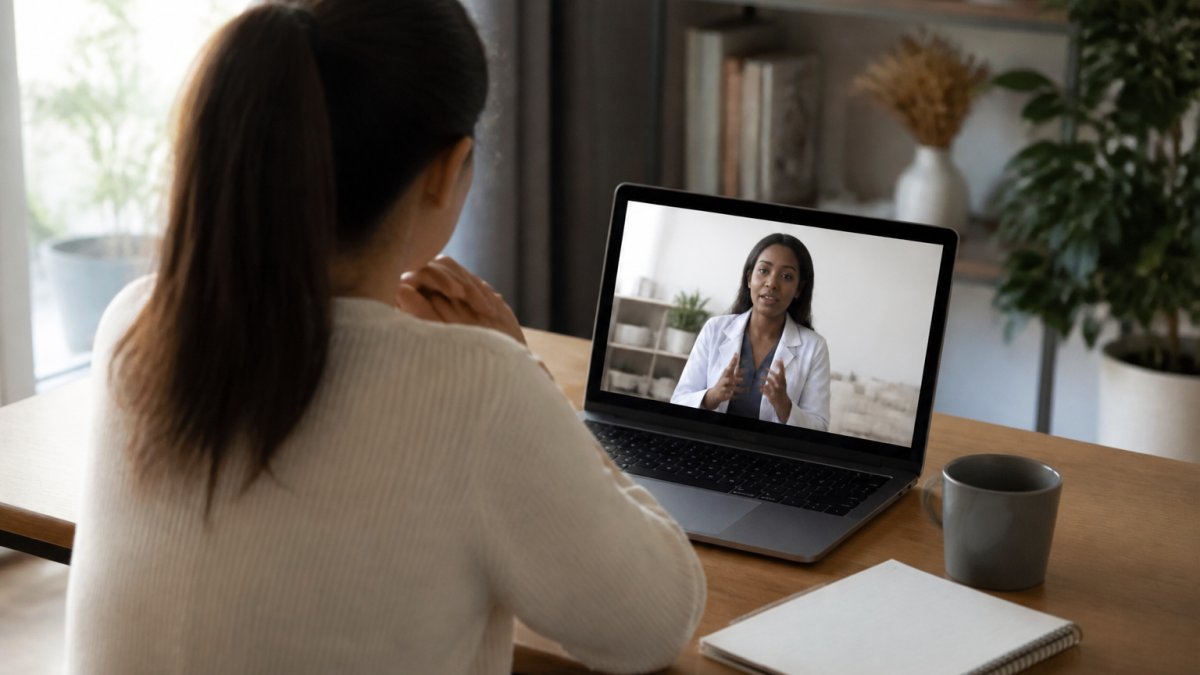
Telehealth requires a stable internet connection, a device with a camera and microphone (computer, tablet, or phone), and a private space where you can speak openly. Most telehealth platforms use encrypted video to protect your privacy and meet healthcare security standards.
You'll need a quiet room where others cannot overhear your session. Poor internet speed can interrupt the connection. If your home environment is chaotic or lacks privacy, telehealth becomes harder to use effectively.
Many providers use HIPAA-compliant platforms that meet federal privacy requirements for mental health care. Before your first appointment, you'll receive login instructions and a chance to test your technology. Starting a few minutes early helps you troubleshoot any connection issues.
What In-Person Psychiatric Care Involves
Clinical Assessment and Physical Examination
In-person psychiatric care begins with a thorough clinical evaluation in a medical office. Your psychiatrist observes your appearance, body language, speech patterns, and emotional responses during conversation. They conduct a physical examination to check vital signs and rule out medical conditions that might mimic psychiatric symptoms.
A physical exam can reveal signs relevant to your mental health. Elevated blood pressure, rapid heart rate, or other findings might suggest anxiety or stress. Your psychiatrist may order blood work or other tests to rule out thyroid problems, vitamin deficiencies, or other medical causes of mood or attention changes.
The in-person setting allows your provider to assess you holistically. They see how you move, make eye contact, and respond to their questions in real time. This direct observation adds clinical information that shapes diagnosis and treatment planning.
Treatment Planning and Continuity
After the initial evaluation, your psychiatrist develops a personalized treatment plan. This plan outlines your diagnosis, the recommended medications or therapies, follow-up visit frequency, and what success looks like for your care.
In-person care typically includes regular office visits for medication management. Your provider monitors how you respond to treatment, adjusts dosages if needed, and watches for side effects. Continuity of care, seeing the same provider over time, builds trust and allows your psychiatrist to track your progress accurately.
Many in-person practices coordinate with therapists, primary care doctors, and other specialists. If you need additional support, your psychiatrist can refer you to other providers within the same health system or network.
Telehealth Medication Management: Effectiveness and Process
Telehealth medication management works through regular video visits where your psychiatrist reviews how you're responding to treatment. You describe any side effects, changes in symptoms, mood, sleep, appetite, or focus.
The process requires honest, detailed feedback from you. Your psychiatrist cannot physically examine you during a telehealth visit, so they rely on what you communicate.
For many conditions, anxiety, depression, ADHD, telehealth medication management produces the same outcomes as in-person care when the patient-provider communication is strong. Regular follow-up appointments (usually every 4 to 8 weeks) help your provider monitor your progress and make adjustments.
Some situations require in-person evaluation. If you report new physical symptoms, significant side effects, or worsening mental health, your provider may recommend an office visit to examine you directly.
Telehealth Psychiatry Benefits and Limitations
Key Benefits of Telehealth
Convenience and access. Telehealth eliminates travel time. You attend appointments from home, which saves hours each week. For people with busy work schedules or limited transportation, this matters greatly.
Faster scheduling. Many telehealth providers offer same-week or next-week appointments. Dynamic Mental Health Services LLC provides same-week telehealth appointments for adults and adolescents across New Jersey, New York, and Connecticut.
Lower barriers to care. No commute, no waiting room, no time off work. For working professionals managing ADHD-related burnout or anxiety, telehealth fits into a busy life more easily.
Flexibility in location. As long as you have privacy and internet, you can attend sessions from home, during lunch breaks, or from a quiet space at work.
Continuity across state lines. If you move or travel, you can keep seeing your psychiatrist if they're licensed in your current location. This reduces disruption to your care.
Important Limitations and Considerations
No physical examination. Your psychiatrist cannot check your vital signs, perform a neurological exam, or physically assess you. For complex medical situations, this is a real limitation.
Home environment challenges. If your home is noisy, crowded, or lacks privacy, telehealth becomes difficult. If others interrupt your session, confidentiality suffers.
Technology dependence. Poor internet, technical glitches, or device problems can disrupt care. If your connection fails mid-session, you may need to reschedule.
Reduced nonverbal communication. Your psychiatrist sees only your face and upper body on screen. They miss body language cues visible in a full in-person meeting. This can make assessment slightly less complete.
Less suitable for crisis situations. If you're in acute crisis, experiencing suicidal thoughts, or need immediate intervention, in-person care or emergency services are more appropriate. Telehealth is not designed for crisis response.
When to Choose In-Person Psychiatric Care
Choose in-person care if you have complex medical needs. If you take multiple medications, have other health conditions, or need physical exams to monitor your treatment, in-person visits provide more thorough assessment.
In-person care works better if your home lacks privacy or a stable internet connection.
If you're in acute crisis, experiencing suicidal or homicidal thoughts, or need emergency psychiatric intervention, go to an emergency room or call a crisis line. Telehealth cannot provide crisis-level care.
In-person psychiatry is also preferable if you struggle to communicate clearly over video or if you feel disconnected from providers you don't meet face-to-face. Some people build stronger therapeutic relationships in person.
Effectiveness and Treatment Outcomes: What the Evidence Shows
Research on telehealth psychiatry shows that video-based care produces similar outcomes to in-person care for many conditions. Patients receiving telehealth treatment for depression, anxiety, and ADHD report comparable symptom improvement and treatment satisfaction.
The quality of the therapeutic relationship matters most. When patients trust their psychiatrist and communicate openly, whether by video or in person, treatment works better.
Telehealth works well for stable, ongoing medication management. Once your psychiatrist has diagnosed your condition and established a treatment plan, regular telehealth check-ins effectively track your progress.
Telehealth is less suitable for complex initial evaluations or when medical factors complicate the picture. A psychiatrist who cannot examine you directly may miss important clinical details that shape diagnosis and treatment.
The evidence suggests that telehealth and in-person care are not better or worse, they're different. Each serves different patients and situations well.
Making Your Decision: Practical Considerations
Access, Scheduling, and Convenience
Think about your schedule and how much time you can dedicate to appointments. Telehealth wins on convenience. You avoid commute time and can often schedule appointments outside standard office hours.
In-person care requires travel time. If you live far from a psychiatrist's office or lack reliable transportation, in-person visits become a burden. Telehealth removes this barrier.
Consider also how quickly you need an appointment. If you're struggling now and need help soon, telehealth providers often fill slots faster than in-person practices.
Privacy, Confidentiality, and Safety at Home
Your home environment affects telehealth's success. Do you have a private space where no one will overhear your conversation? Can you speak openly without interruptions?
If you live with family, roommates, or others, privacy becomes a real concern. In-person care in a clinical office guarantees confidentiality. Telehealth in a shared home does not.
Also consider safety. If you're in an unstable living situation or with someone who controls your access to technology, in-person care may be safer. Telehealth requires your own device and internet access, things you control.
For adolescents, parents often worry about privacy during telehealth sessions. A teen may feel more comfortable opening up to a provider in a clinical office than on a home video call where a parent is nearby.
Insurance Coverage and Cost Considerations
Most major insurance plans cover both telehealth and in-person psychiatric care. Check your plan's details to understand your copay, deductible, and whether your psychiatrist is in-network.
Dynamic Mental Health Services LLC accepts most major insurance plans through Headway, which simplifies billing and reduces surprise costs. Before scheduling, verify your coverage and ask about out-of-pocket expenses.
Telehealth often costs the same as in-person care from a billing perspective. The real savings come from avoiding travel time, parking, and time off work.
If cost is your main concern, ask about telehealth providers in your insurance network. They may have more availability and shorter wait times than in-person practices, which means faster access to care.
Both telehealth and in-person psychiatric care deliver real treatment and real results. We're licensed in New Jersey, New York, and Connecticut, and we accept most major insurance through Headway. Book Now to schedule your first appointment and take the next step toward better mental health.
Frequently Asked Questions
Is telehealth psychiatry as effective as in-person psychiatric care?
Research shows telehealth and in-person psychiatric care produce comparable treatment outcomes for many conditions, including depression, anxiety, and ADHD. Effectiveness depends more on the quality of the therapeutic relationship, accurate diagnosis, and consistent medication management than on the format. However, telehealth works best when patients have a stable home environment and reliable internet access. Severe psychiatric crises or complex cases requiring physical examination may benefit from in-person evaluation first.
Can a psychiatrist diagnose ADHD through telehealth psychiatric evaluation?
Yes, a qualified psychiatrist or psychiatric nurse practitioner can conduct a comprehensive ADHD diagnostic assessment via telehealth, including DSM-5 criteria evaluation, clinical history, and symptom rating scales. The key is a thorough structured interview and detailed developmental and medical history. Some providers use validated screening tools administered during the video visit. However, if physical examination or laboratory testing is needed to rule out other conditions, in-person follow-up may be necessary.
What are the main limitations of telehealth psychiatry?
Telehealth psychiatry has important limitations: it cannot provide emergency crisis intervention, may not be suitable for patients with severe behavioral symptoms, requires reliable internet and a private space, and cannot include physical examination if clinically needed. Some patients struggle with therapeutic connection through a screen, and certain medication evaluations may require baseline laboratory work or vital signs that are harder to obtain remotely. Additionally, if a patient needs to escalate to a higher level of care, coordination with local emergency services may be more complex.
When should I choose in-person psychiatric care over telehealth?
Choose in-person psychiatric care if you are in crisis or having thoughts of self-harm, have complex medical conditions requiring physical examination, need immediate medication adjustment based on vital signs or lab results, have difficulty with technology or internet access, struggle to maintain privacy at home, or feel your symptoms are too severe for remote assessment. In-person care is also preferable if you are a first-time patient needing a comprehensive baseline evaluation or if you have had poor outcomes with previous telehealth experiences.