
Table of Contents
- How Telehealth Therapy Works for Teens and Privacy Protections
- Teen Therapy Confidentiality: What's Protected and What Isn't
- Parent Access to Teen Therapy Records and Session Information
- Private Online Therapy for Teenagers: Creating a Secure Home Environment
- How to Talk to Parents About Therapy While Protecting Your Privacy
- Questions to Ask Your Therapist About Privacy Before Your First Session
- Telehealth Therapy Privacy vs. In-Person Care: What's Different
- Frequently Asked Questions
Last Updated: October 9, 2026
How Telehealth Therapy Works for Teens and Privacy Protections
When your teen starts telehealth therapy, you're likely wondering what happens behind the screen. The short answer is yes, with important caveats about how privacy works, who can access information, and what situations override confidentiality protections.
Telehealth therapy uses secure video platforms to connect your teen with a licensed mental health professional. The therapist conducts sessions the same way they would in an office, but from a remote location.
Privacy protections in telehealth are built into federal law and professional ethics standards. However, privacy isn't absolute. Understanding what's protected and what isn't helps you and your teen make informed decisions about treatment.
At Dynamic Mental Health Services LLC, we prioritize confidentiality while maintaining the safety standards required by law.
Teen Therapy Confidentiality: What's Protected and What Isn't
Your teen's therapy sessions are confidential in most cases. A licensed therapist cannot share details about what your teen discusses without permission, with specific exceptions.
What is typically confidential:
- The content of therapy sessions
- Your teen's feelings, thoughts, and personal struggles
- Treatment plans and therapeutic approaches
- Progress notes and clinical observations
What is not confidential (therapists must disclose):
- Threats of harm to self or others
- Active abuse or neglect
- Court orders or subpoenas
- Suspected child abuse or exploitation
Your teen's therapist is a mandated reporter. This means they are legally required to report suspected child abuse, neglect, or exploitation to child protective services or law enforcement. This overrides confidentiality protections because safety comes first.
HIPAA and Protected Health Information
HIPAA (Health Insurance Portability and Accountability Act) is the federal law that protects medical and mental health information. It applies to most telehealth providers, including psychiatrists, therapists, and counselors.
Under HIPAA, your teen's health information is protected.
However, HIPAA does not give your teen absolute privacy from parents. Parents of minors retain certain rights to access health information, though these rights vary by state and the teen's age.
When Confidentiality Has Limits
Several situations override a therapist's duty to keep information confidential:
Imminent danger: If your teen expresses intent to harm themselves or others, the therapist must report this to emergency services and may contact parents immediately.
Abuse or neglect: Suspected child abuse, sexual abuse, or neglect must be reported to child protective services within a specific timeframe (usually 24-72 hours, depending on your state).
Court orders: A judge can order the therapist to release records or testify in court. This might happen in custody disputes, criminal cases, or dependency proceedings.
Mandatory reporting laws: Your state's laws define what therapists must report and to whom.
Parent Access to Teen Therapy Records and Session Information
Can you, as a parent, see what your teen discusses in therapy? The answer depends on your state's laws, your teen's age, and the therapist's clinical judgment.
In most states:
- Parents of children under 12 typically have the right to access therapy records and information about treatment.
- Teens aged 13-17 have increasing privacy rights, especially in states with "mature minor" or "minor consent" laws.
- Some states allow therapists to withhold session details from parents if disclosure would harm the therapeutic relationship or the teen's safety.
What therapists typically share with parents:
- Whether your teen is in treatment and appointment frequency
- General progress updates (e.g., "Your teen is engaged in therapy and working on coping skills")
- Safety concerns or risk factors
- Treatment recommendations or medication updates
What therapists typically do not share:
- Specific content of sessions or what your teen disclosed
- Personal struggles, trauma, or sensitive topics your teen discussed
- Details that would breach your teen's privacy without clinical justification
Before your teen's first session, ask the therapist directly about their policy on parent communication. Different providers have different approaches.
Dynamic Mental Health Services LLC maintains clear communication with parents while respecting your teen's developing autonomy. We discuss our confidentiality policies during the initial consultation so everyone understands the boundaries.
Private Online Therapy for Teenagers: Creating a Secure Home Environment
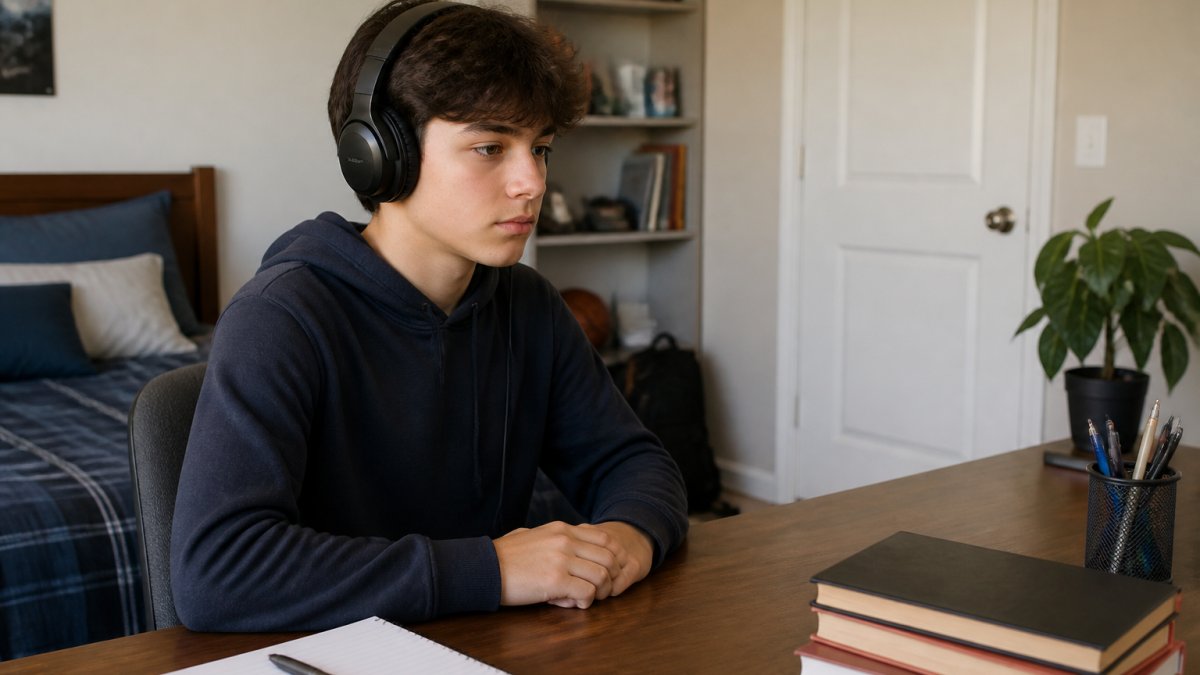
Telehealth therapy requires a private space. Your teen needs to feel safe talking openly without worrying that siblings, parents, or roommates can overhear. Creating this space involves both physical privacy and digital security.
Setting Up a Private Physical Space
A private room with a closed door is ideal. Your teen should be able to speak freely without others listening.
Practical steps:
- Choose a room where your teen can close the door (bedroom, home office, or study)
- Let family members know not to interrupt during the session
- Turn off notifications on other devices to minimize distractions
- Use headphones if needed to keep conversation private
- Ensure the background is appropriate (not bedroom wall, ideally a neutral space)
If your home doesn't have a private room, consider alternatives: a parked car in a quiet location, a library study room, or a friend's home with permission.
Digital Privacy and Device Security
Privacy extends beyond the physical space. Your teen's device and internet connection must be secure so session details aren't visible to others or intercepted online.
Device security:
- Use a device your teen can control (their own laptop or tablet, not a shared family computer)
- Ensure the device has updated security software and a strong password
- Log out of shared accounts (email, social media) before the session
- Close other browser tabs or applications that might display notifications
Internet security:
- Use a secure, password-protected Wi-Fi network (not public Wi-Fi)
- Ask about the telehealth platform's encryption standards, HIPAA-compliant platforms use end-to-end encryption
- Avoid recording or screenshotting sessions without the therapist's permission
After the session:
- Clear the browser history if the device is shared
- Log out of the telehealth platform
- Delete any email confirmations or appointment reminders that contain sensitive information
How to Talk to Parents About Therapy While Protecting Your Privacy
If you're a teen considering therapy, you may worry about what your parents will know. The conversation about starting therapy doesn't have to mean losing all privacy.
Before therapy starts:
- Talk to your parents about why you want therapy (general reason is enough, you don't need to disclose everything)
- Ask what information they expect to receive from the therapist
- Explain that therapy works best when you feel safe sharing openly
- Suggest that the therapist contact your parents only about safety concerns, not session details
During therapy:
- Ask your therapist directly what they'll tell your parents and what they'll keep confidential
- Discuss any concerns about privacy with your therapist, not just your parents
- Understand that your therapist must report safety issues, this is not a breach of privacy, it's protection
Setting boundaries:
- You can ask your therapist to minimize information shared with parents while still meeting legal requirements
- Your therapist may suggest a family session if communication with parents is part of your treatment
- You have the right to ask questions about confidentiality and understand the answers
The therapeutic relationship works best when you trust your therapist. That trust includes understanding exactly what they will and won't keep confidential.
Questions to Ask Your Therapist About Privacy Before Your First Session
Before your first telehealth session, prepare questions about privacy. This conversation sets expectations and prevents surprises later.
Ask these questions:
- What information will you share with my parents, and what will you keep confidential?
- Under what circumstances would you contact my parents without my permission?
- How do you keep my session information secure on your platform?
- Who else at your practice might see my records?
- How long do you keep session notes, and who can access them?
- If my parents request my records, what will they see?
- What happens if I tell you something that makes you concerned for my safety?
- Can I request that certain topics stay between us?
- How do you handle billing and insurance, will my parents see detailed charges?
A good therapist will answer these questions clearly and honestly. If a therapist is vague or dismissive about privacy, that's a red flag. Your comfort and trust matter.
Telehealth Therapy Privacy vs. In-Person Care: What's Different
Is telehealth therapy private for teens compared to in-person therapy? Privacy protections are essentially the same, but the logistics differ.
In-person therapy:
- Sessions happen in a private office with a closed door
- Your teen travels to the office (giving privacy during travel)
- Records are stored in a physical file cabinet at the office
- Parents may see the therapist in the waiting room
Telehealth therapy:
- Sessions happen wherever your teen logs in (ideally a private space at home)
- No travel required, but your teen must create a private environment
- Records are stored digitally on encrypted servers
- Parents never see the therapist or the office setting
- Digital privacy depends on device and internet security
Both formats are governed by the same confidentiality laws (HIPAA, state laws, mandatory reporting). The difference is practical, not legal.
Privacy in telehealth therapy is real, but it has limits, and those limits exist to keep your teen safe.
If you're seeking specialized telehealth care for your teen, Dynamic Mental Health Services LLC provides comprehensive psychiatric evaluation and therapy with clear privacy protections.
Frequently Asked Questions
Can parents see what a teen says in online therapy?
No. Telehealth therapy for teens operates under HIPAA confidentiality rules, which protect the therapist-patient relationship. Parents cannot access session notes, recordings, or details of what their teen discusses, even if they pay for the services. However, therapists may inform parents if a teen expresses intent to harm themselves or others, or if abuse is disclosed. The specific privacy rules vary slightly by state and the teen's age, so it's important to clarify these boundaries with your therapist at the start.
Is online therapy as confidential as in-person therapy?
Yes, when the platform is HIPAA-compliant and properly secured. Telehealth therapy sessions use encrypted video calls that meet the same confidentiality standards as office visits. The main difference is the environment: at home, you control who can overhear the session, whereas an office provides physical privacy built in. Digital security depends on using a secure internet connection and keeping your device password-protected. Both formats offer equal legal protection of your health information.
What should a teen ask a therapist about privacy before the first session?
Ask about confidentiality limits upfront: when the therapist must report to parents, what triggers mandatory reporting (safety concerns, abuse), and whether your state allows minors to consent to treatment independently. Clarify what information will be documented, who can access your records, and how your therapist handles parental contact. Ask if session notes are kept separate from billing information, and whether your therapist uses a secure messaging system. Understanding these details before starting helps you decide what to share and builds trust with your provider.
How can a teen make their online therapy session more private at home?
Choose a quiet room with a door you can lock or close, away from common areas like the kitchen or living room. Use headphones or earbuds so your voice doesn't carry. Tell family members you need uninterrupted time and set a specific appointment window. Keep your device password-protected and log out after each session. If privacy is very limited, talk to your therapist about scheduling sessions at a different time or location, or ask about phone-only sessions if video feels too exposed. A secure, private space helps you open up and makes the session more effective.